- Family concerns
- Trauma and abuse
- Communication problems
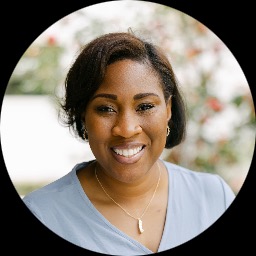
About Brittney
Brittney Fortson is a Licensed Independent Clinical Social Worker (LICSW) and a Licensed Clinical Social Worker (LCSW) practicing in Alabama with 14 years of experience. She focuses on family concerns, trauma and abuse, intimacy-related issues, parenting, and self esteem. Brittney also lists communication problems among her areas of focus and helps people tackle repeating conflicts and hard conversations.
She keeps sessions direct and practical. Brittney listens to what matters most and helps people name the problems they keep running into. Conversations look at patterns in relationships and at what gets in the way of saying what you need.
Her approach draws on methods that help change thoughts and behaviors, explore personal values, and build workable steps forward. She uses Acceptance and Commitment Therapy to clarify values and take action, and Cognitive Behavioral Therapy to notice and shift unhelpful thinking. Solution-Focused Therapy supports short-term goal setting and small experiments to test new ways of relating.
Brittney aims to make sessions a place where clients can talk through hard topics without judgment. She encourages concrete next steps between meetings so progress is visible. Sessions tend to be collaborative and goal oriented rather than purely exploratory.
She practices under the credentials LICSW, LCSW, and CSW and works from Alabama. Sessions are conducted in English. Before booking, clients should confirm current session options and scheduling steps using the site flow.
How her therapeutic approaches work for remote sessions
Acceptance and Commitment Therapy (ACT) focuses on clarifying personal values and taking small committed steps toward them. It helps when someone feels stuck, unsure about priorities, or wants to act in line with what matters most. Cognitive Behavioral Therapy (CBT) looks at the link between thoughts, feelings, and behavior and teaches practical ways to test and change unhelpful thinking patterns. CBT can be useful for addressing recurring arguments and negative self-talk.Finding the right approach tends to be collaborative. The therapist will work with the client to choose methods that fit their goals and preferences. That might mean using ACT tools some weeks and CBT techniques other weeks, depending on what the client needs.
The profile does not specify which online session formats are offered, so confirm current options before booking. Online work can make it easier to fit therapy into a busy week, allow shorter check-ins when needed, and remove travel time. It also makes it possible to try techniques between sessions in the client’s everyday settings, which can speed up learning and help test new ways of communicating.
Areas of expertise
Primary focus
Additional focus areas
Therapeutic approaches
Experience
14+ years
Credentials
Alabama, Georgia
Languages
English
Frequently asked questions
What kinds of concerns does she help with?
She works with family issues, trauma and abuse, intimacy-related problems, parenting, and self esteem. Communication problems and related relationship patterns are also listed among her focus areas.
What is her therapeutic style?
She takes a direct, practical approach that looks at patterns in relationships and steps people can take. Sessions focus on naming problems and testing small changes between meetings.
How much experience does she have?
She has 14 years of professional experience working with the listed concerns.
What credentials and location apply to her practice?
She holds the credentials LICSW, LCSW, and CSW and practices in Alabama.
Which languages are supported and can international clients join?
Sessions are offered in English and she is not accepting international clients.
What session formats are available?
Please confirm current session formats before booking, as the profile does not specify which formats are offered.
How are costs handled?
Cost varies by location and sessions use a subscription that can be canceled at any time.
How do I begin a first session?
Select the See online therapy options button, complete the short matching questionnaire, and schedule a first session through the site.
Online talk therapy is not emergency care, and no counselor can promise how a conversation or a relationship will turn out. If you feel unsafe, call or text 988, or call 911. Crisis information